
Don't Rebrand
“Your brand has equity. Don’t throw it away!” I’ve heard this so many times. And every time, I think: equity in what, exactly?
Here’s the unspoken truth most brand consultants won’t tell you: the “don’t rebrand” advice isn’t wisdom. It’s risk aversion dressed up as strategy. And for many businesses, following it is costing them more than a rebrand ever would.
I’m a rebrand strategist. I’ve led rebrands across industries, and I’ve also talked clients out of rebrands when the timing wasn’t right. So I’m not here to sell you a rebrand. I’m here to guide you on clear, strategic thinking.
The real question isn’t “should we rebrand?” It’s “what is our brand doing right now?”
A brand isn’t a logo. It isn’t a color palette. It’s a living system of associations(what your audience thinks, feels, and expects) And if those associations are wrong, outdated, or invisible, you don’t have equity. You have a liability.
That’s true risk.
Staying with a broken brand because it’s familiar isn’t loyalty to your heritage. It’s inertia. And inertia is the number one reason good businesses become irrelevant ones and decay from the inside.
This is where my Positioning Flywheel™ changes everything.
Positioning isn’t a one-time decision you make and bury in a brand guidelines PDF. It’s an ongoing process; a compounding system! When you frame the right associations for your ideal audience, you earn relevance. Relevance deepens the relationship. And that relationship becomes the engine that drives every piece of business growth.
This makes sales, marketing, operations, language, training, campaigns, etc. all. make sense.
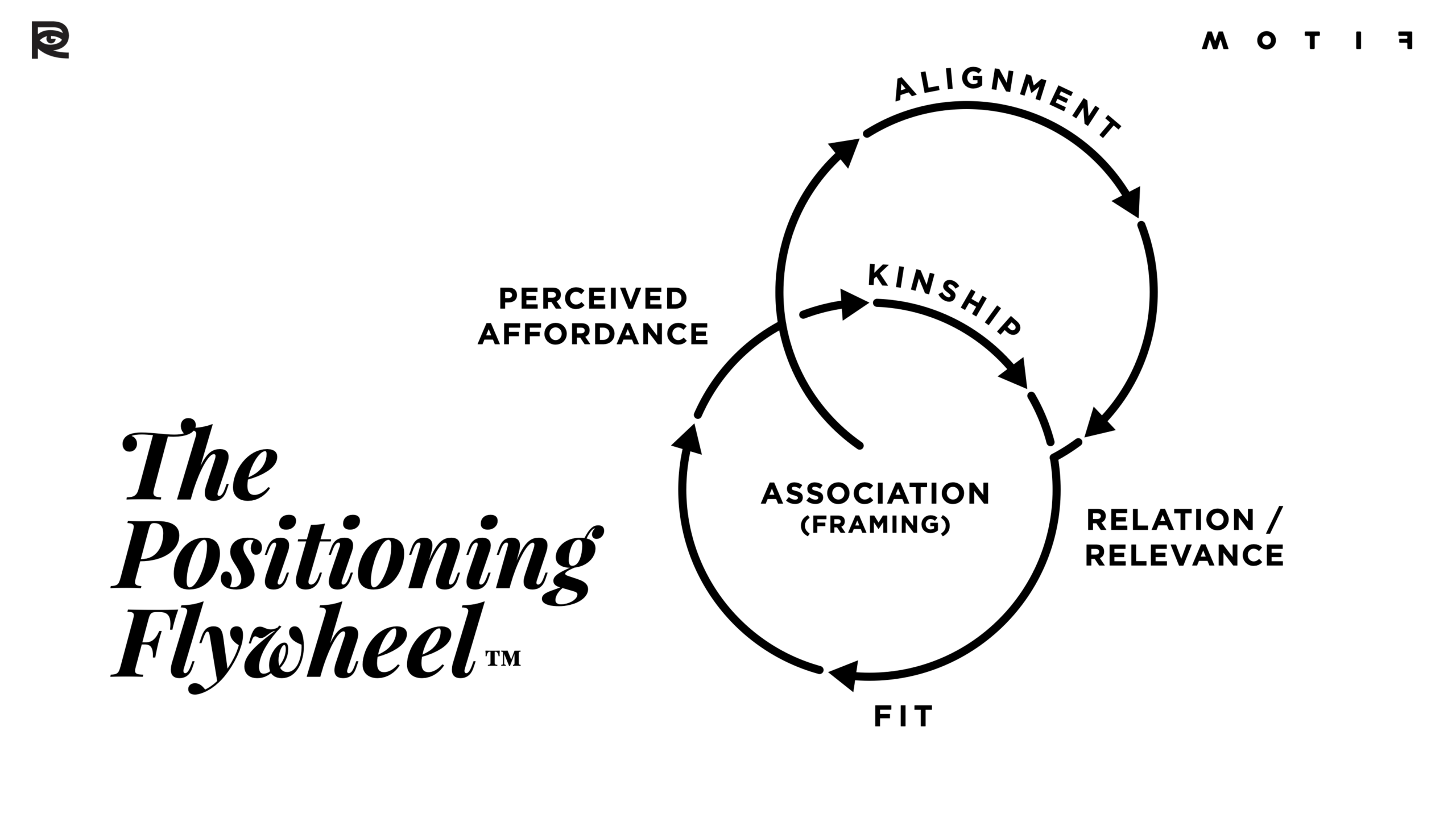
The Positioning Flywheel™
Frame associations → Build relevance → Nurture relationship → Compound preference
By perpetually refining again and again, the brand gains momentum with each cycle. It compounds deliberately!
The flywheel only works if it’s spinning in the right direction. If your current brand is framing the wrong associations (or none at all) the wheel isn’t stuck. It’s spinning backwards. It’s working against your goals, your profitability, your business.
A rebrand, done right, doesn’t throw away the wheel. It reorients it and leverages it.
Business is transactional. Brand is relational.
If you listen to our podcast, Brandy, you have heard us say this plenty of times “business is transactional, brand is relational.”
You can run a business on transactions. But you build a category-defining company on relationships. This is built on how your audience perceives, trusts, chooses you, and experiences you. Again and again and again….
If your brand isn’t doing that work, no amount of “protecting your equity” will save you. The market doesn’t reward legacy. It rewards relevance. It rewards fit. Hence, survival of the fittest.
So next time someone tells you “don’t rebrand!” ask yourself if your brand is building the relationship that drives the business you want? If the answer is anything less than a confident yes, the conversation isn’t over….. It’s just beginning.
I help founders and leadership teams reframe their brand positioning to drive real business growth… not just a new look. I transform brands. If your brand isn’t working as hard as you are, let’s talk.

Kirkland's rebrands under new ownership at Beyond
“The umbrella brand could be helpful to connect these ‘sister brands,’ but the name sounds very generic, unfortunately,” said Reilly Newman, brand strategist at the studio Motif Brands. Newman noted that in 2023, Overstock acquired the rights to the Bed Bath & Beyond out of bankruptcy. The brand then joined Overstock under Beyond ownership.
Newman said the change to The Brand House Collective is theoretically sound but requires proper strategic execution and understanding of the brand naming to succeed.
Digital Commerce 360
Why So Many Brands Name Products For Montana
“The way you see it is the way you say it,” said Reilly Newman, a brand strategist and founder of Motif Brands, a California-based brand transformation studio. “Montana is very approachable and memorable that way.”
Geographic names in general have become popular for brands, with Apple leading the way by naming its very techy iOS systems after very outdoorsy California landmarks, Newman said. By creating natural imagery in the minds of consumers, that can help to sell products, he added.
Even though Montana isn’t unique in conveying an outdoorsy-centric visual, it lands well with customers on both sides of the political spectrum in the U.S., Newman said, adding that “everyone likes the outdoors.”
“The word choice we use really does rewire the brain,” Newman said.
Consider a company that makes shoes sold at a retailer like REI and opts for “Montana” for the name of a new model.
“That would be a great name because it fits the audience and makes them feel a certain way,” Newman said. “It’s the perception of how you want someone to feel when they wear the shoe.”
Cowboy State Daily
The Hidden Message You Never Noticed on a Coca-Cola Bottle
“We asked Reilly Newman, founder of the California-based branding studio Motif Brands and co-author of Brandy: 101 Sips of Wisdom for Attaining a Successful Brand, for his professional take. “The Coca-Cola logo has become an American icon dipped in nostalgia and flavor,” he says. “The signature look of the word mark helps the brand’s logo feel authentic and refreshing. It flows visually as the typography forms each letter.” So what’s the hidden message? “The ribbons feel like abstract liquid while there are positive curvatures to the shapes that do, yes, feel like smiles,” Newman says.
Newman also notes that the flow and uplifting angles of the logo help a consumer’s brain register more positive feelings, gliding left to right across the word mark.”
Reader's Digest
Meta (Facebook) shocks retail world with unexpected news
“And as Reilly Newman, founder of Motif Brands, tells TheStreet, it isn’t the only risk Meta is facing.
The Street
McDonald's is killing its Starbucks and Dunkin' Competitor CosMc's
“The brand was very iconic and well done, but I believe the attempt to enter the beverage market was simply too tight with strong brands like Starbucks, Dunkin’, Dutch Bros (BROS), and even 7-Eleven making strides on all fronts,” Newman said.
Newman also said that with five locations the concept was clearly still just in the “testing” phase, but the chain will be able to use what it learned and incorporate it into the main brand.
“The CosMc’s brand may not be worth its own store, but the ‘mode’ that CosMc’s can capture would be worth wrapping within the McDonald’s offering,” Newman noted.
“Allowing CosMc’s to be the beverage arm of the McDonald’s experience could help elevate beverage perceptions because of the ‘niche’ to which it would be dedicated. The power here is leveraging sub-brands similar to the strategy Costco (COST), Trader Joe’s, and Target (TGT) have proven effective,” Newman said, adding that the experience may also help the concept gain more traction to then roll out smaller footprint storefronts like Dutch Bros and other brands have deployed.”
Quartz
Meet New Masculinity: Gen Z Men Fuel Beef Renaissance
Branding expert Reilly Newman at Motif Brands said the beef renaissance among young men may be attributable to the rebranding of it as protein.
“This is the pendulum swinging from the fake meat and plant-based trends that previously were a flash in the pan. Since then, protein has become top of mind as new brands flaunt the amount in their products, which has been in tandem with the rise of the reframing of meat as protein thanks to brands like Chipotle,” Newman said.
“The health aspect of meat has become more popular as podcasts and influencers share the protein power behind meat.”
The Food Institute
Customer Loyalty Starts With Consistency, Ends With Advocacy
Reilly Newman, brand strategist and founder at Motif Brands, told CMSWire, “The future lies in true experiences that are customized and become more personal…this has been proven not only for the perception of luxury but also for the future of value.” Newman suggested that loyalty in the coming years will hinge less on reach and more on resonance—the ability to make customers feel individually understood and valued.
CMSWire
38 Hidden Messages in Logos You See All the Time
Adding a hidden message or symbol to a brand’s logo can add layers that not only makes it more unique but also incredibly memorable—especially once you “figure out” the logo’s secret meaning. “Like solving a problem or puzzle, we will remember this about the logo and brand, which increases our perceived value,” says Reilly Newman, a brand strategist at Motif Brands. “Additionally, we will tell others about hidden messages and show them, which increases the awareness of the brand.”
To help us decode and decipher the secret messages and hidden images in logos, Reader’s Digest spoke with Newman and two other experts in branding and marketing. Read on to learn about some fascinating facts about the hidden messages in logos you see every day.
This is one of Newman’s favorite logos, because it crafts the brand’s visual identity using both positive and negative space. “Part of the brilliance is that it transforms the brand’s logo from a visual mark to a visual experience upon each viewing,” he says. Plus, as Hesse points out, “once you see the arrow in the FedEx logo, it’s virtually impossible to unsee it from that point on,” making it hard to forget.